AI-Native Mobile Product
PodTalk
Turn reading backlogs into personalised audio learning.
PodTalk transforms topics, PDFs, text documents and note images into narrated podcasts, quizzes and shareable audio experiences.
- Role
- Solo Founder & Product Engineer
- Platform
- iOS
- Scope
- Product design, Flutter development, serverless backend, AI orchestration, audio delivery and monetisation

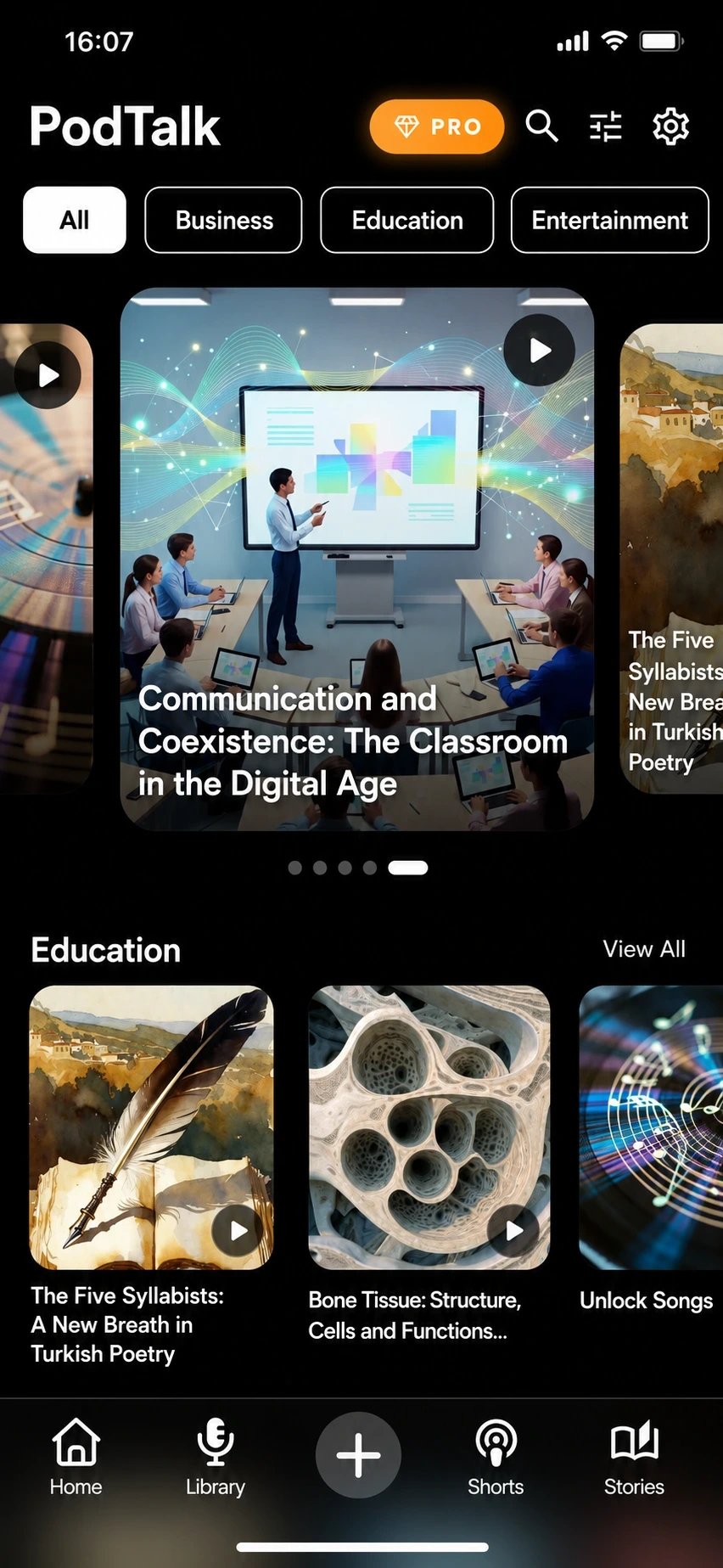
People save more material than they can realistically read.
The opportunity was not to build another summarisation tool, but to create a complete listening workflow that could turn unstructured material into useful audio for commutes, walks and routine work.

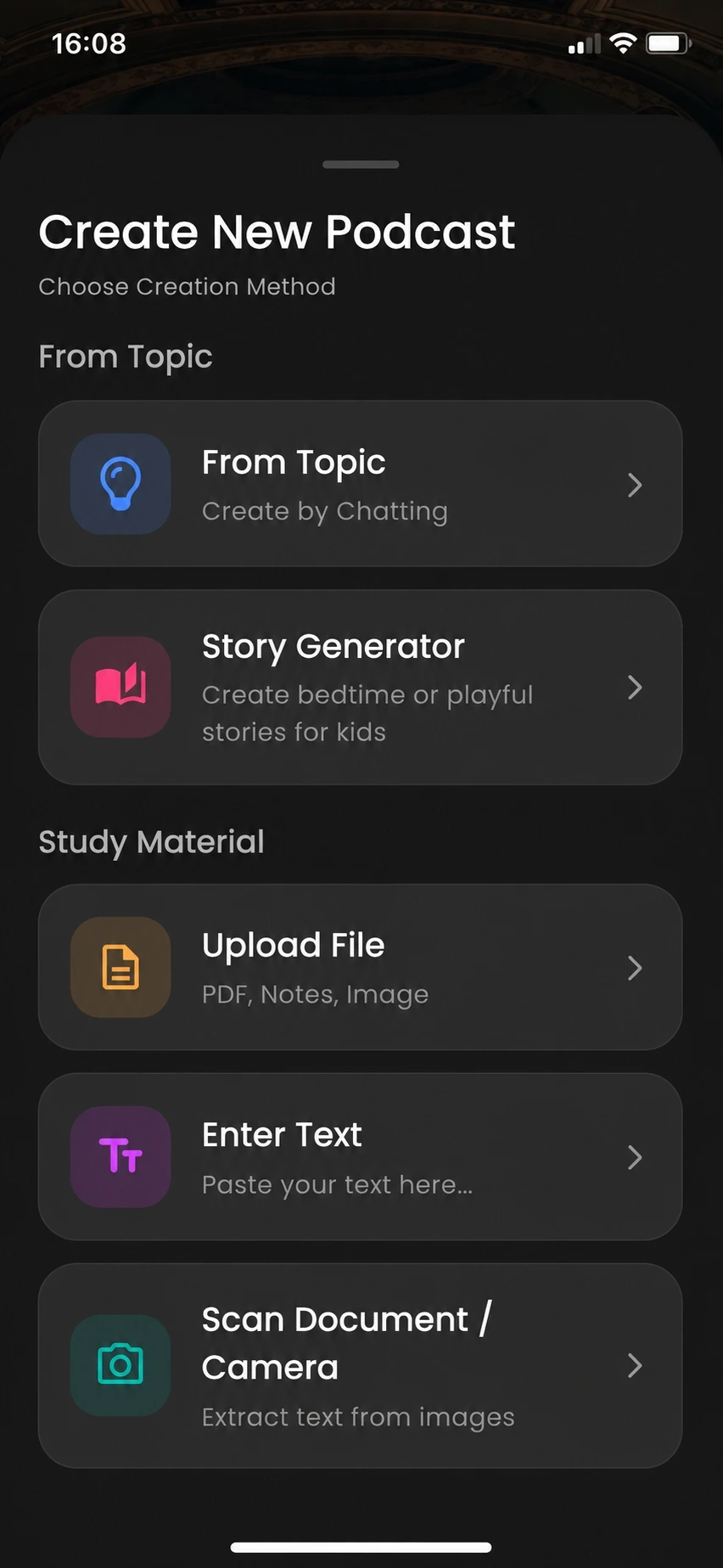
Input
Add a topic, PDF, text document or note image.
Generation pipeline
- Text extraction
- Content structuring
- Script generation
- Voice synthesis
- Timestamp alignment
- Storage and delivery
Experience
The generated content remains available through background playback, system media controls, quizzes and shareable media.
Three implementation choices that made the system dependable.
Multi-stage generation pipeline
Document extraction, script generation, voice synthesis, alignment and delivery were separated into independent stages.
This made long-running operations easier to observe, retry and maintain than a single opaque generation request.
SHA-256 audio caching
Generated narration text is hashed before requesting text-to-speech.
When identical content already exists, PodTalk reuses the stored audio asset instead of generating it again, reducing duplicate API usage and voice-generation costs.
Backend-controlled AI operations
Gemini, ElevenLabs and media-processing operations run through Firebase Cloud Functions.
Provider credentials and privileged operations remain outside the mobile client, creating a clearer security boundary between the application and external services.
Launched on the App Store and completed the full product lifecycle from user acquisition to recurring subscriptions.
- 432+
- First-time downloads
- 89
- In-app purchase events
- 8
- Active paid plans
- First
- Recurring revenue
The initial release validated that users were willing to generate and pay for personalised audio content.
Subscription churn also showed that technical delivery was not enough. The product needed a narrower primary audience and a stronger reason for users to return repeatedly.