Mobile Game / Systems Design & Architecture
Pikoza
A published Match-3 puzzle game, with island and harbour progression in development.
An ocean-fantasy mobile Match-3 puzzle game built with Flutter. The published puzzle game is being extended with an independent island and harbour economy for a future release.
- Role
- Solo Game & Mobile Product Engineer
- Platform
- iOS
- Scope
- Game systems design, Flutter mobile development, deterministic match algorithms, and performance optimisation

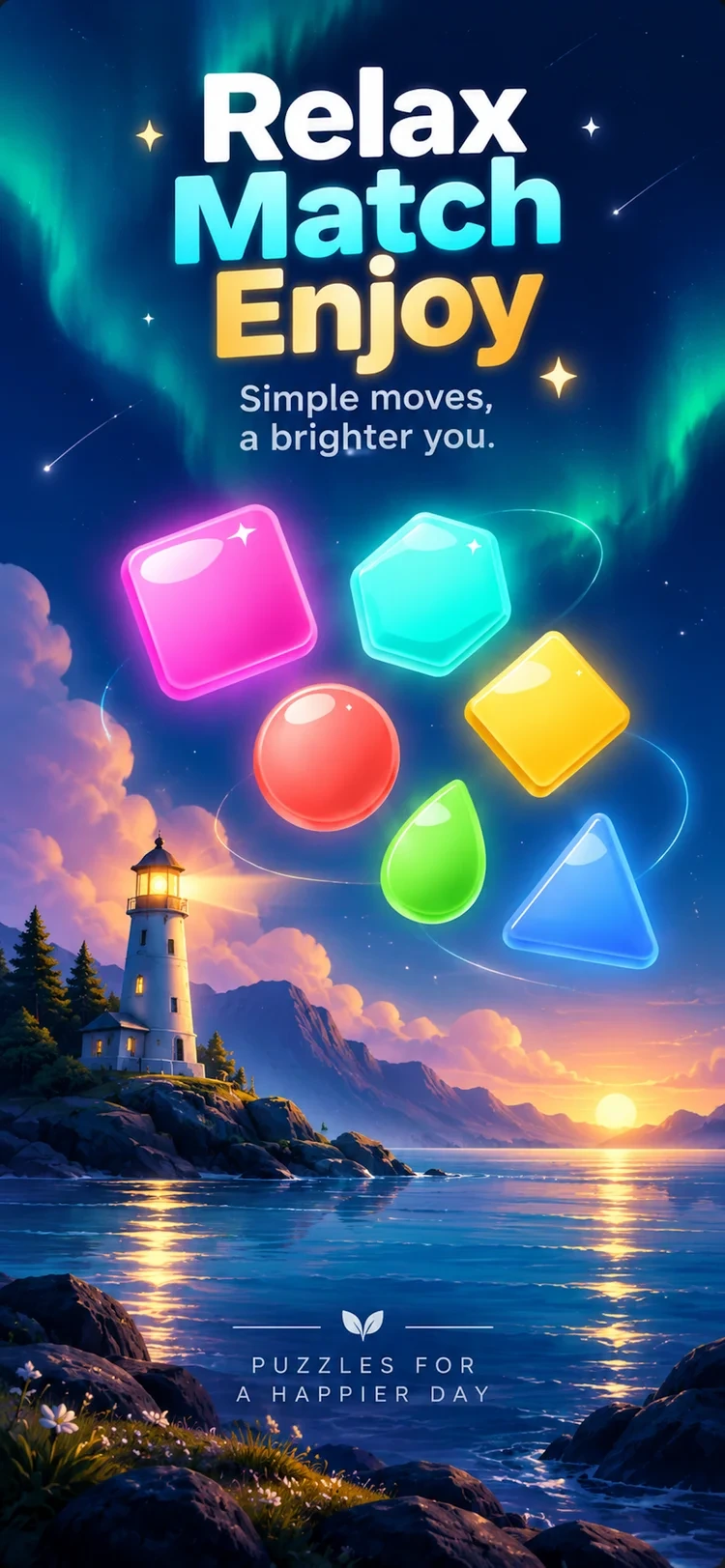
Promotional artwork and mockups
Many mobile puzzle games tightly bind core board puzzles to aggressive meta-game gating, producing high cognitive friction and artificial difficulty spikes.
The product challenge was to create an engaging ocean-fantasy Match-3 experience where the core puzzle solving and the island-harbour progression enrich one another without either becoming a mandatory choke point.
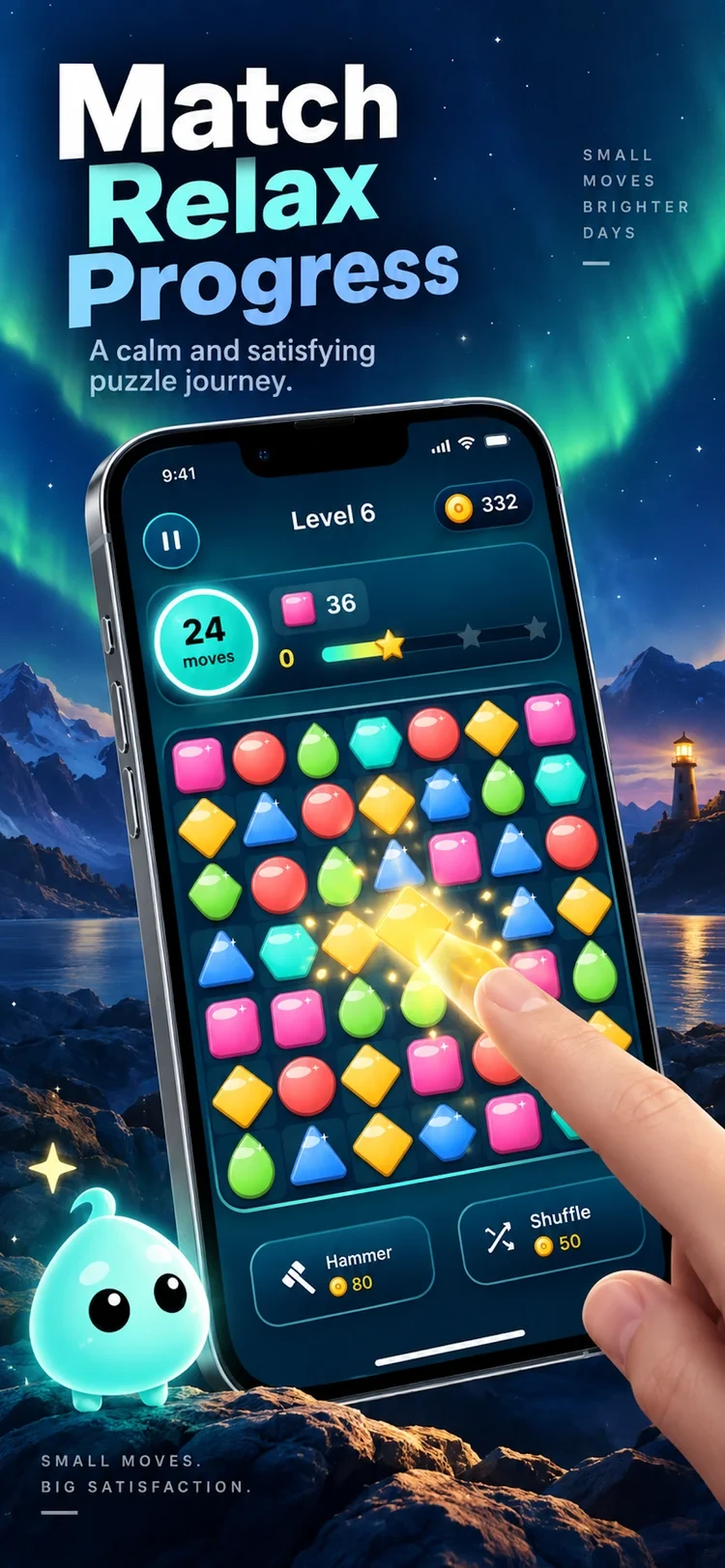
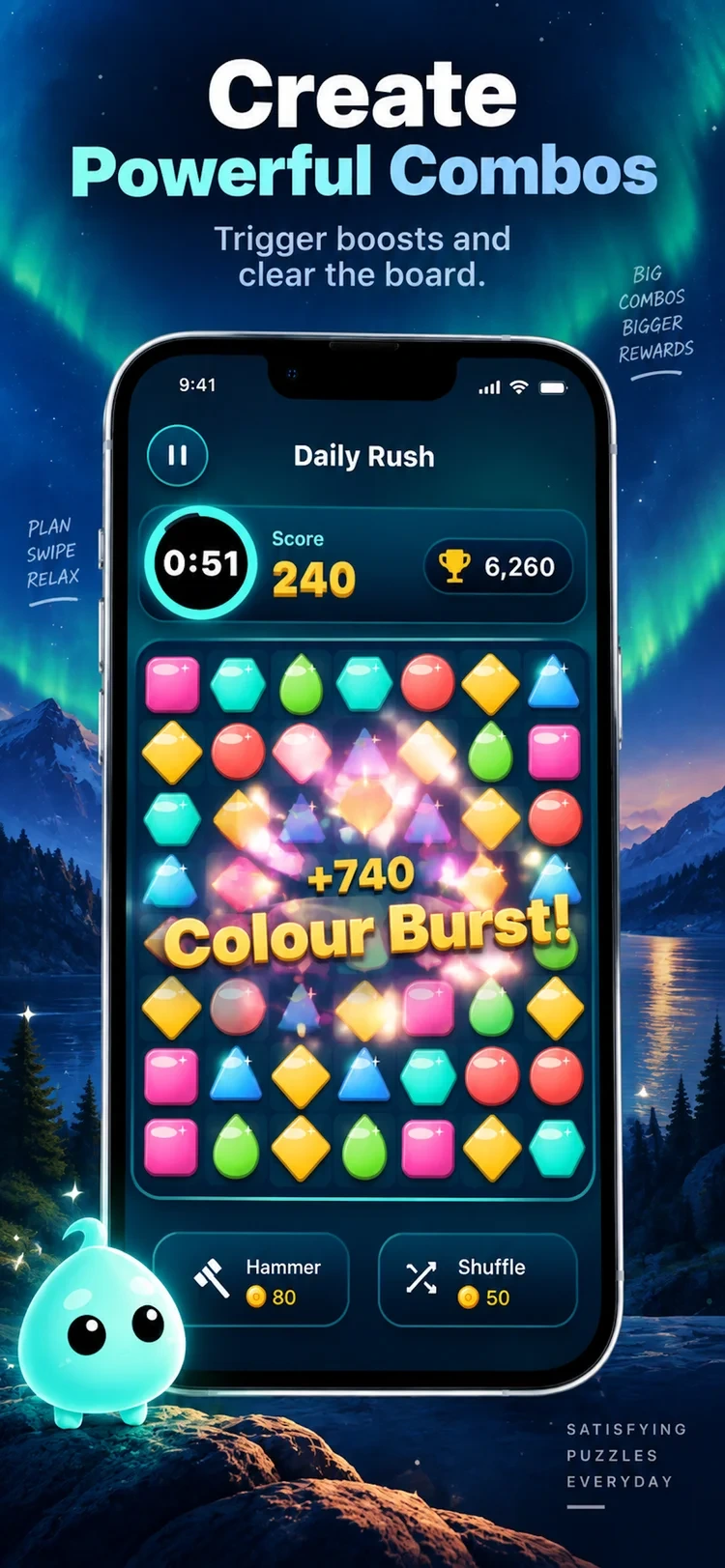
Promotional artwork and mockups
Input
Select and swap tiles on custom board geometries to trigger tactical cascades.
Game loop & meta pipeline
- Board state matrix initialization
- Deterministic match & cascade detection
- Booster resolution & obstacle clearance
- State decoupling & animation scheduling
- Harbour trade & island meta-progression (upcoming version)
Experience
The upcoming version uses completed levels to award resources for island production and trade fleets. These systems are in development and are not part of the current App Store release.
Three choices behind the implementation.
Decoupling game logic from UI rendering
Match-3 grid evaluation, move validation, and cascade calculations were isolated into a deterministic Dart state machine completely independent from the Flutter widget tree.
Board state changes can be verified independently, allowing visual animations to interpolate smoothly without stalling the core game logic.
Independent dual-loop meta architecture
Island and harbour progression was architected as a parallel economy rather than a mandatory roadblock that artificially restricts puzzle moves.
In the upcoming version, session rewards are intended to fuel harbour upgrades without forcing a progression gate after every level.
Rewards belong to game state
In the current development version, game logic owns production, spending and rewards; animations present the outcome. Stock changes, spending and rewards are saved together, with checks against repeated harvest and delivery claims.
A visual completion does not become a second reward.
The Match-3 puzzle game is published on the App Store. Island and harbour progression are being developed for a future version.
Separating core puzzle evaluation from the animation timeline is essential for keeping mobile games responsive on diverse hardware.
Keeping rewards in game state makes their correctness independent of the animation that presents them.